


African Health News (AHENA): Identifying and classifying health news in native African languages
By
Masakhane
Supported by
Health Discourse Research Initiative
Published
October 26, 2026
Research Objective
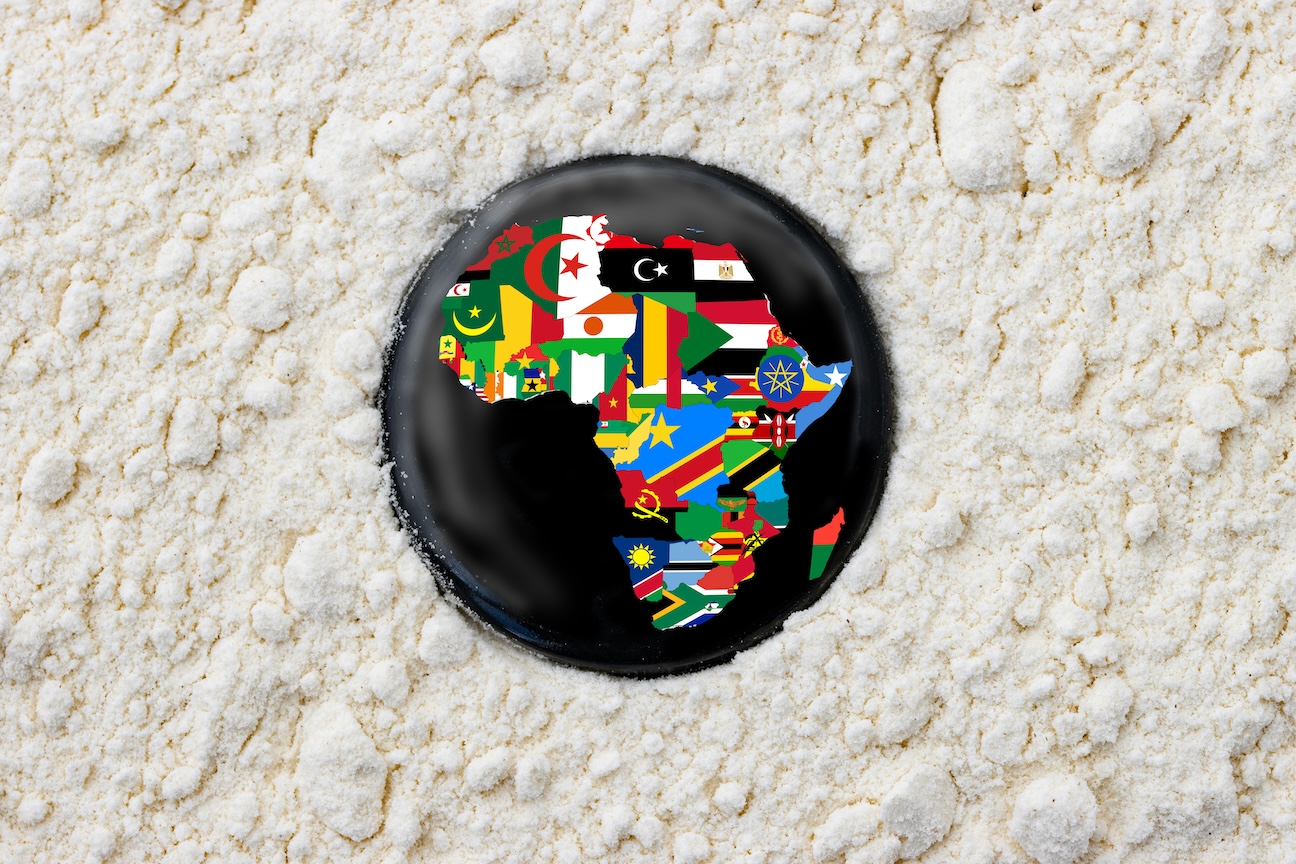
The primary objective of AHENA is to create a multilingual dataset and benchmark that addresses the scarcity of fine-grained health topic categorization of African news articles in native African languages. The project provides a new benchmark and evaluation baselines for language identification of African languages in the news domain, identification of health topics (e.g. tuberculosis, polio, ebola, mental health, and maternal health) and affected population groups (e.g. women, adolescents, older adults, and infants), summarizing articles in their original languages, and producing English summaries to support aggregated reporting.
Activities
Using Media Cloud, MEAG and Masakhane assembled a collection of 312,409 news articles from 148 domains, with publication dates spanning January 2017 to October 2025. The Masakhane research team performed language identification and health-topic filtering that yielded 19,834 candidate health articles for subsequent selection and human verification. The team recruited and compensated two native-speaking annotators per language through the Masakhane community. Annotation covered language verification, health topics, target populations, and summary writing, with a second annotator reviewing summaries.
The final resource contains 8,290 articles with paired source-language and English summaries across Amharic, Arabic, Hausa, Kinyarwanda, Luganda, Shona, Somali, Swahili, and Zulu. A complementary set of 6,342 articles across seven languages supports language identification and multi-label classification using 22 health-topic labels and eight population labels.
Health topic labels included: Other, Primary Careand Access, Healthcare Policies and Government Funding, COVID-19, Maternal andChild Health, Mental Health / Suicide, Non-Communicable Diseases, Vaccines,Pharmaceutical Supply and Access, Malnutrition, HIV/AIDS, Pollution and Health,Digital Health / Healthcare Apps, Climate Change and Health, Malaria, NeglectedTropical Diseases, Tuberculosis (TB), Polio, Mpox (Monkeypox), Ebola, Human Papillomavirus (HPV), and Asthma.
Population labels included: Women, Youth/Children, Men, Adolescents/Young Adults, Mothers, Infants, Elderly, and LGBTQ+Community.
The researcher team established training, development, and test splits, and evaluated open and proprietary language models under zero-shot and few-shot prompting.
Results
Through this project, the Masakhane team developed a more accurate and efficient FastText-based language identification model for African languages in the news domain; this is what was used on the large 312K collection of Media cloud data. They developed a more accurate BERT-based topic classification model to accurately extract health articles from a large collection of news articles; this was trained on MasakhaNEWS news classification dataset. They developed a new benchmark, AHENA-topic, a multi-label classification using the health topic and population labels listed above. They developed a new benchmark, AHENA-summ, a summarization dataset where annotators provide a summary of each article in both native African languages and English language for aggregate reporting. Finally, the research team provided comprehensive evaluation using both BERT based models and LLMs which shows that the multi-label classification is challenging for both open and proprietary models since they can only reach a macro-F1 score of 50% on both health-topic labels and population labels. This shows that the AHENA benchmark is challenging for current LLMs.
Masakhane is working on academic publication detailing this project, which will be linked here when available.
Downloads
Related publications
Would you like to work with us?
Let’s get started.

Media
Ecosystems
Analysis
Group
